
Hi, I'm Paul P.. I live in Michigan. Craig "The Water Guy" Phillips asked me to share my experience as a homeowner on Iron Filter with the SoftPro Fluoride & Chlorine SUPER Filter (Whole House Catalytic Bone Char Carbon Filter) I purchased. This is how my adventures played out. I hope this helps you in your decision.
Why I Finally Decided to Tackle Our Water Quality Issues
The breaking point came last spring when my wife refused to drink our tap water anymore. I couldn't blame her – the chlorine smell was so strong it felt like drinking pool water, and there was this persistent chemical aftertaste that lingered long after each glass.
Living in Michigan, I thought our municipal water would be decent, but boy was I wrong. The taste wasn't the only problem either. Our morning showers felt more like a chemical bath, leaving our skin dry and itchy. My daughter's sensitive skin was getting worse, and even our coffee tasted off despite using a premium coffee maker.
Did you know that municipal water treatment often adds fluoride and uses heavy chlorination that can create harmful byproducts?
I didn't realize this until I started researching. The chlorine was doing its job killing bacteria, but it was also creating trihalomethanes (THMs) and other disinfection byproducts that I definitely didn't want my family consuming daily.
We were spending nearly $40 a month on bottled water just for drinking, and that didn't solve the shower and cooking issues. I knew there had to be a better long-term solution, which led me down the rabbit hole of whole house water filtration systems.
My Research Journey Into Whole House Filtration Systems
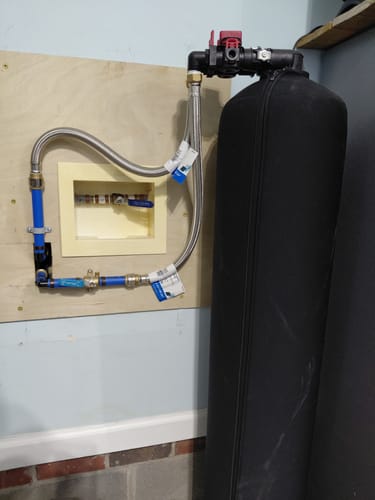
I spent weeks researching different filtration technologies, and honestly, it was overwhelming at first. There were so many options – standard carbon filters, reverse osmosis systems, UV sterilizers, and combinations of various media types.
What caught my attention about catalytic carbon was its ability to handle chloramines, not just regular chlorine. Our water utility had recently switched to chloramines for disinfection, which explained why our water quality seemed to get worse over the past year. Regular activated carbon struggles with chloramines, but catalytic carbon breaks them down more effectively.
The bone char component was intriguing because it specifically targets fluoride removal. While I understand fluoride's role in dental health, I wanted the choice to control our family's intake rather than having it mandated through our water supply. Bone char has been used for centuries for water purification and has a unique affinity for fluoride molecules.
I also learned about upflow design versus downflow systems. The upflow configuration prevents channeling and ensures better contact time between water and filter media. This means more thorough filtration and longer filter life – two things that made economic sense for a whole house system.
After comparing capacity, flow rates, and maintenance requirements across different brands, the SoftPro system stood out for its robust construction and comprehensive filtration approach.
Installation Experience and First Week Observations
I opted for professional installation since this involved cutting into the main water line, and I'm glad I did. The installer arrived promptly and completed everything in about four hours, including the bypass valve installation and initial system startup.
The unit itself is larger than I expected – about 4 feet tall and 13 inches in diameter – but it fits comfortably in our basement utility area. The build quality impressed me immediately; the tank feels substantial and the control head has a solid, commercial-grade feel to it.
During the first flush cycle, I was surprised by how much sediment and discolored water came out. The installer explained this was normal as the new media settled and any manufacturing residues were cleared out. After about 20 minutes of flushing, the water ran crystal clear.
The difference was noticeable within the first day. That evening, my wife commented on how much better our drinking water tasted – no more chlorine smell or chemical aftertaste. Our ice cubes even tasted cleaner, something I hadn't anticipated but definitely appreciated.
The water pressure remained strong throughout the house, which was a relief since I'd read horror stories about whole house filters causing pressure drops. At peak usage times – morning showers while the dishwasher runs – we maintained excellent flow to all fixtures.
Deep Dive Into the Catalytic Carbon and Bone Char Technology

Eight months in, I've gained a real appreciation for how this dual-media system works. The catalytic carbon operates through enhanced adsorption and catalytic reduction processes that break down chloramines at the molecular level.
Unlike regular activated carbon that simply traps contaminants, catalytic carbon actually transforms chloramines into harmless chloride ions and nitrogen gas. This means it doesn't get saturated as quickly and maintains its effectiveness longer. I've measured our water before and after filtration using test strips, and we consistently see chlorine levels drop from 2.5 ppm to undetectable levels.
The bone char component handles fluoride through a different mechanism entirely. Fluoride ions have a strong affinity for the calcium phosphate structure in bone char, essentially swapping places with other ions in a process called ion exchange. Our municipal water typically contains 0.8-1.0 ppm fluoride, and post-filtration testing shows levels below 0.1 ppm.
What impressed me most was the system's consistency over time. Many carbon filters start strong but degrade quickly. The upflow design ensures even media utilization, and I haven't noticed any decline in performance even after filtering thousands of gallons.
The automatic backwash cycle runs every few days, lasting about 12 minutes. It's nearly silent – I only notice it when I happen to walk past the utility room during a cycle. This regeneration process keeps the media bed clean and prevents channeling that could reduce filtration effectiveness.
Real-World Performance After 8 Months of Daily Use
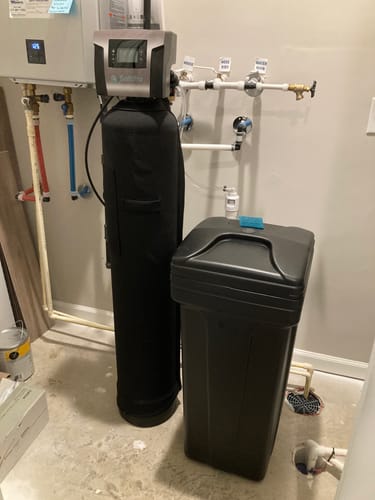
The proof is in our daily experience, and the improvements have been substantial across every area where we use water. Our morning coffee tastes dramatically better – we can actually taste the coffee's natural flavors without that underlying chemical taste masking everything.
Shower experiences improved significantly within the first week. The harsh, drying effects we experienced before are completely gone. My wife's hair feels softer qualitywatertreatment.com and more manageable, and our daughter's skin irritation cleared up within a month. I attribute this to removing the chloramines that were stripping natural oils from skin and hair.
Cooking with filtered water has been a revelation. Pasta water doesn't have that slightly metallic taste anymore, and when I make bread, the dough rises more consistently. Chlorine can interfere with yeast activity, something I learned after installation that explained some of my previous baking frustrations.
I've been tracking our bottled water purchases, and we've eliminated about 85% of our previous consumption. We still buy sparkling water occasionally, but we're saving approximately $35 monthly on still water purchases. Over the system's expected 10-year lifespan, this represents significant savings.
Flow rate performance has remained excellent throughout all seasons and usage patterns. Even during peak demand periods – teenage daughter's long showers coinciding with laundry and dishwasher cycles – water pressure stays strong at every fixture.
Understanding the Contaminants This System Addresses
This dual-media system targets an impressive range of water quality issues that many single-stage filters miss.
Primary contaminants removed include chlorine, chloramines, fluoride, volatile organic compounds (VOCs), trihalomethanes, pesticide residues, herbicide compounds, pharmaceutical traces, industrial solvents, benzene, toluene, and various chemical byproducts from municipal treatment processes.
The catalytic carbon excels at breaking down chloramines, which are increasingly used by water utilities because they're more stable than regular chlorine. However, they're also harder to remove and can form more harmful disinfection byproducts. Standard carbon filters struggle with chloramines, but catalytic carbon handles them effectively.
Bone char's fluoride removal capability is particularly valuable given the ongoing debate about fluoride in drinking water. Whether you're concerned about potential health effects or simply want control over your family's fluoride intake, this system provides that choice.
What doesn't this system remove?
It's not designed for bacteria, viruses, or heavy metals like lead and mercury. For those contaminants, you'd need additional treatment stages like UV sterilization or specialized ion exchange resins. It also doesn't address hardness minerals like calcium and magnesium – you'd need a separate water softener for that.
Understanding these limitations helped me set appropriate expectations and consider complementary systems if needed in the future.
Maintenance Requirements and Long-Term Ownership Costs
Maintenance has been refreshingly straightforward compared to other filtration systems I've owned. The automated backwash cycles handle day-to-day maintenance, requiring no intervention from me beyond ensuring adequate drain flow.
The media replacement schedule depends on usage and water quality, but SoftPro estimates 3-5 years for typical residential applications. At our current usage levels – family of four with moderate to heavy water use – I'm planning for media replacement around the 4-year mark.
Media replacement costs approximately $400-500 for both catalytic carbon and bone char, which breaks down to roughly $100-125 annually. Considering we were spending $480 yearly on bottled water alone, this represents excellent value even before factoring in the health and convenience benefits.
The control valve has a 10-year warranty, and the tank is rated for much longer. Based on SoftPro's reputation and the build quality I've observed, I expect this system to provide reliable service for at least a decade with proper maintenance.
Monthly operating costs are minimal. The system uses approximately 15-20 gallons per backwash cycle, running every 3-4 days depending on usage. At our local water rates, this adds less than $3 monthly to our utility bill.
No salt, chemicals, or frequent filter cartridge changes are required – just the periodic media replacement and annual system inspection that I can easily perform myself.
Final Assessment and Who This System Serves Best
After eight months of ownership, I'm thoroughly satisfied with this investment. The combination of improved taste, health benefits, convenience, and long-term cost savings makes it one of the better home improvements we've undertaken.
This system excels for families dealing with heavily chlorinated municipal water, especially if your utility uses chloramines. If you're concerned about fluoride intake, sensitive to chlorine byproducts, or simply want the best-tasting water possible throughout your home, this technology combination is hard to beat.
The upfront investment is substantial – expect to budget $2,500-3,500 including professional installation – but the long-term value proposition is compelling when you factor in bottled water elimination, potential health benefits, and improved quality of life.
Who might want to consider alternatives?
If your primary concerns are bacteria, viruses, or heavy metals, you'd benefit more from UV sterilization or reverse osmosis systems. For hard water issues, a traditional water softener would be more appropriate. Budget-conscious households might start with point-of-use filters and upgrade later.
Looking ahead, I'm confident this system will continue providing excellent service for years to come. The robust construction, proven technology, and comprehensive filtration make it a worthwhile investment for families prioritizing water quality throughout their entire home.
The peace of mind knowing our water is free from chloramines, fluoride, and numerous other contaminants – while tasting great and supporting our health – makes every monthly payment worthwhile. Eight months in, I'd make the same decision again without hesitation.