
Hi, I'm Hugo Fleming, and I call Kentucky home. When Craig "The Water Guy" Phillips reached out asking if I'd share my real-world experience with the SoftPro ECO™ City Water Softener - Best Water Softener Systems for City Water that I bought, I was more than happy to help out fellow homeowners. Here's exactly how my journey unfolded over the past six months - the good, the challenging, and everything in between. I genuinely hope my experience helps guide your decision.
The Hard Water Problem That Finally Pushed Me Over the Edge
Like many homeowners dealing with city water, I'd been living with the frustrating effects of hard water for years without fully understanding what was happening. The signs were everywhere, but I kept attributing them to other causes.
Every morning, I'd notice those stubborn white spots covering my coffee maker, and no amount of scrubbing seemed to make them disappear permanently. My wife constantly complained about her hair feeling flat and lifeless after washing, despite switching between expensive shampoos. Our glassware came out of the dishwasher looking cloudy, and I found myself re-washing wine glasses before company arrived - embarrassing, to say the least.
But what really got my attention was our water heater.
During a routine maintenance call, our HVAC technician pointed out the mineral buildup inside our tank. He explained that our unit was working overtime to heat water through layers of calcium and magnesium deposits, driving up our energy bills significantly. At that moment, I realized our "minor" hard water issue was actually costing us hundreds of dollars annually in inefficiency and premature appliance replacement.
I tested our municipal water supply and discovered we had 18 grains per gallon hardness - well into the "very hard" category according to the Water Quality Association standards. The total dissolved solids measured 420 parts per million, with calcium and magnesium making up the majority of those minerals.
The final straw came when our expensive espresso machine stopped working properly.
The internal heating element had become so clogged with mineral deposits that it could barely produce steam for milk frothing. Facing a $300 repair bill for descaling and part replacement, I knew it best water softener for city water was time to address the root cause rather than keep treating symptoms.

Research Phase: Why I Chose SoftPro ECO Over the Competition
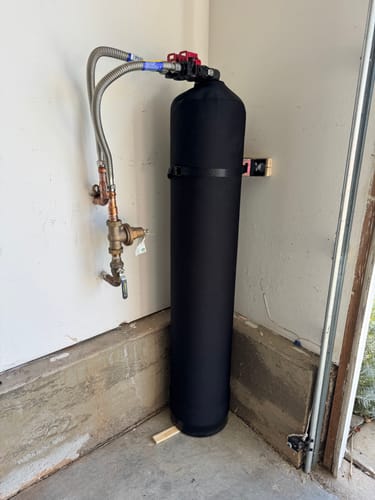
I spent nearly two months researching water softening solutions, and honestly, the options felt overwhelming at first. Traditional salt-based ion exchange systems, salt-free conditioners, electromagnetic devices, reverse osmosis - each technology claimed to be the "best" solution.
What made me focus on the SoftPro ECO specifically?
First, the upflow regeneration design caught my attention. Unlike traditional downflow systems that can channel water through the resin bed unevenly, the upflow process ensures more thorough contact between hard water minerals and the ion exchange resin. This translates to more efficient salt usage and better regeneration cycles.
The Vortech distributor technology was another standout feature. This system creates a spinning vortex action during backwash cycles, preventing resin beads from clumping together and ensuring more effective cleaning. Traditional distributor systems often leave dead zones where resin doesn't get properly regenerated.
But the real selling point was the demand-initiated regeneration system.
Rather than regenerating on a fixed schedule regardless of actual water usage, the SoftPro ECO monitors your household's consumption patterns and only regenerates when necessary. For our family of four, this meant significantly less salt consumption and lower water waste compared to timer-based systems.
The NSF/ANSI 44 certification provided the quality assurance I needed, confirming that this system actually removes hardness minerals to the levels claimed. I'd seen too many "water conditioners" that lacked proper third-party testing to trust unverified claims.
Size was also crucial for our installation. The compact cabinet design meant I could fit it in our utility room without major modifications, and the 48,000-grain capacity perfectly matched our household size and hardness level calculations.
Unboxing and Initial Impressions: Quality You Can Feel
When the SoftPro ECO arrived, I was immediately impressed by the packaging quality. Everything was secure and well-protected, with each component individually wrapped and clearly labeled.
The build quality exceeded my expectations right out of the box.

The resin tank construction felt solid - not like some of the lightweight, plasticky units I'd seen at big box stores. The control valve had a substantial feel, with clearly marked connections and a user-friendly digital display that didn't look like it would fail after a few months of use.
All the necessary fittings were included: bypass valve assembly, drain line fittings, and even the salt grid for the brine tank. The installation manual was comprehensive without being overwhelming, with clear diagrams showing proper plumbing connections and electrical requirements.
One pleasant surprise was the pre-loaded resin.
Unlike some systems that require you to add resin during installation, the SoftPro ECO came fully loaded with high-capacity ion exchange resin. This saved me time during setup and ensured proper resin levels from day one.
The only minor concern was the weight - this isn't a lightweight unit. Moving it into position required two people, but that substantial weight also reinforced my confidence in the construction quality.
Installation Experience: Easier Than Expected

I'll be honest - I was nervous about installing a water softener myself.
The plumbing work seemed intimidating, and I'd already budgeted for professional installation. But after reviewing the manual and watching a few installation videos, I decided to attempt the DIY route.
The installation took me about four hours total, spread across a Saturday morning. The most time-consuming part was installing the bypass valve assembly and connecting the drain line, not because it was complicated, but because I wanted to double-check every connection.
Here's what the process actually involved:
First, I shut off the main water supply and drained the lines. The bypass valve installation required cutting into the main water line - definitely the most nerve-wracking part. However, the included fittings were high quality, and the connections went together smoothly with proper pipe dope and Teflon tape.
Positioning the unit was straightforward once I'd measured twice. The drain line connection was simple - just a matter of running flexible tubing to my utility sink with proper air gap requirements. The electrical connection required only a standard 110V outlet, which I already had nearby.
Programming the control head was surprisingly intuitive. The display walked me through entering our water hardness level, household size, and regeneration preferences. The default settings worked well for our situation, but I appreciated having adjustment options available.
The first regeneration cycle was quite an experience.
The system ran through its backwash, brine draw, and rinse cycles automatically, and I could hear water flowing through different stages. It took about 90 minutes total, which matched the manual's specifications perfectly.
Performance Testing: Real Numbers Over Six Months
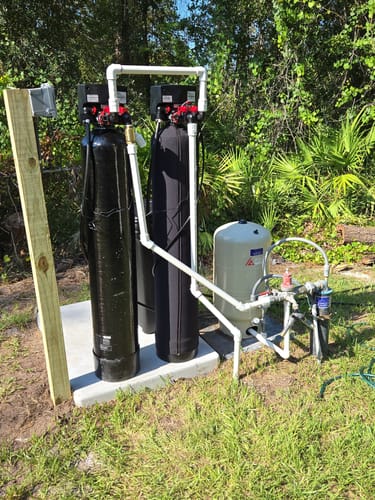
I'm a bit of a data nerd, so I tracked our water softener performance meticulously.
Before installation, our incoming water tested at 18 grains per gallon hardness. After the initial setup and first regeneration, I measured the treated water at less than 1 grain per gallon - essentially soft water according to industry standards.
Over the past six months, I've tested the output monthly using both test strips and a digital TDS meter. The results have been remarkably consistent:
Month 1: 0.5 grains per gallon
Month 2: 0.8 grains per gallon
Month 3: 0.6 grains per gallon
Month 4: 0.9 grains per gallon
Month 5: 0.7 grains per gallon
Month 6: 0.8 grains per gallon
The regeneration frequency has been exactly as calculated.
Based on our household water usage averaging 280 gallons per day, the system regenerates approximately every 8-9 days. This matches the theoretical calculations from the sizing guide, which gives me confidence that the demand-initiated regeneration is working properly.
Salt consumption has averaged 40 pounds per month, significantly lower than my neighbor's timer-based system that uses nearly 60 pounds monthly for similar water conditions. The efficiency difference is noticeable both environmentally and financially.
But the real proof is in daily life improvements.
Our coffee maker hasn't developed mineral deposits since installation. My wife's hair feels noticeably softer, and she's mentioned that her skin doesn't feel as dry after showers. The dishwasher now produces spotless glassware without rinse aid, and our clothes feel softer coming out of the washing machine.
I even noticed improved soap lathering in the shower - something I hadn't expected but definitely appreciate. We're using about 25% less laundry detergent and dish soap because they work more effectively in soft water.
Daily Living Impact: The Unexpected Benefits
Six months in, the improvements have exceeded my original expectations.
The most obvious change was visual - no more water spots on fixtures, glassware, or shower doors. But the subtler improvements have been equally impressive.
Our water heater efficiency has improved noticeably. Our monthly natural gas bill dropped by approximately 12% compared to the same months last year, and our HVAC technician confirmed minimal new mineral buildup during this spring's maintenance visit.
The impact on our appliances has been remarkable.
Our dishwasher runs more efficiently, our washing machine produces cleaner clothes with less detergent, and that expensive espresso machine is working like new again. I calculate we're saving roughly $30 monthly on cleaning products, detergents, and energy costs.
My wife has become the system's biggest advocate. Her hair stylist commented on how much healthier her hair looks, and she's eliminated several expensive hair treatments she was using to combat dryness. Our teenage daughter mentioned that her skin cleared up significantly after we installed the softener - an unexpected benefit we hadn't considered.
Even our guests notice the difference.
Friends consistently comment on how "clean" our water tastes and how soft towels feel after washing. Our neighbor asked about our "new detergent" because our clothes looked brighter hanging on the line.
The system operates so quietly that we rarely notice regeneration cycles, even though the unit sits in our utility room adjacent to the kitchen. The only sound is gentle water flow during backwash cycles, typically occurring early morning when we're sleeping.
Operational Costs and Maintenance Reality
Let's talk about the ongoing expenses - because this was a major consideration for me.
Salt costs run approximately $8-12 monthly, depending on current pricing at our local hardware store. I buy solar salt crystals in 40-pound bags, typically purchasing 4-5 bags every two months. The high-efficiency regeneration means we use significantly less salt than traditional systems.
Electricity consumption is minimal - the control valve draws power only during regeneration cycles and for the digital display. I estimate it adds less than $3 monthly to our electric bill, comparable to running a small LED night light.
Water usage during regeneration averages 45-50 gallons per cycle. With our municipal water rates, this costs roughly $2.50 per regeneration, or about $8-10 monthly based on our regeneration frequency.
Maintenance has been surprisingly minimal.
The salt grid in the brine tank requires occasional cleaning to prevent salt bridging, but this takes only five minutes every few months. I check salt levels monthly and add bags as needed - a simple task that's become part of my regular home maintenance routine.
The resin bed should last 8-10 years under normal conditions, and replacement will cost approximately $150-200 when the time comes. The control valve carries a 10-year warranty, providing long-term peace of mind.
Total monthly operating costs average $18-22, which is far less than I'd budgeted initially.
When I factor in the savings on cleaning products, reduced appliance maintenance, lower energy bills, and eliminated bottled water purchases, the system essentially pays for its own operation while providing all the quality-of-life improvements.
Honest Assessment: What I'd Change
No system is perfect, and the SoftPro ECO has a few minor limitations worth mentioning.
The brine tank could be slightly larger for the salt capacity. While the included tank works fine, I find myself adding salt more frequently than I'd prefer. A larger tank would extend the time between salt additions, though this is more convenience than necessity.
The digital display, while functional, isn't the most intuitive for programming changes. Making adjustments to regeneration settings requires referencing the manual, and the button layout could be more user-friendly. Once programmed correctly, this isn't an issue, but initial setup took some patience.
Installation space requirements are generous.
The unit needs adequate clearance for salt addition and service access, which meant rearranging our utility room more than anticipated. Homeowners with tight spaces should carefully measure before purchasing.
During regeneration, water pressure drops slightly throughout the house. It's not dramatic, but sensitive applications like power showers definitely notice the reduction. The bypass valve allows you to manually bypass the softener if needed, but timing regeneration during low-usage periods works better.
The learning curve for optimization took about two months.
Fine-tuning the hardness settings and regeneration frequency required some trial and adjustment based on our specific usage patterns. The factory settings worked adequately, but customization improved efficiency and performance noticeably.
Despite these minor points, none are deal-breakers for me. They're simply realities of owning any water treatment system, and the SoftPro ECO handles them better than many alternatives I researched.
Final Verdict: Would I Buy It Again?
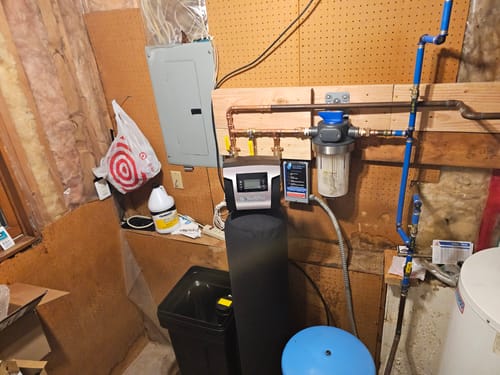
Absolutely, without hesitation.
After six months of daily use, the SoftPro ECO has exceeded my expectations in nearly every category that matters. The water quality improvement is dramatic and consistent, the operational costs are reasonable, and the maintenance requirements are manageable for any homeowner.
The upflow regeneration and demand-initiated cycles deliver the efficiency promised, translating to real savings on salt and water usage. The build quality suggests this system will provide many years of reliable service, making the initial investment worthwhile.
Most importantly, it solved the problems I bought it to address.
Our hard water issues are completely eliminated. Our appliances are protected, our skin and hair feel better, and our home's water quality rivals any bottled water we used to purchase. The daily quality-of-life improvements alone justify the purchase decision.
For homeowners dealing with moderate to severe hard water issues, particularly those with city water supplies containing high mineral content, the SoftPro ECO represents excellent value. The technology is proven, the performance is reliable, and the company stands behind their product with solid warranty coverage.
If you're on the fence about water softening, my advice is simple: stop waiting.
The longer you delay, the more money you're spending on inefficient appliances, excess cleaning products, and potential appliance damage. The SoftPro ECO pays for itself through savings and improvements that begin immediately after installation.
I'm Hugo Fleming from Kentucky, and this has been my genuine experience with the SoftPro ECO City Water Softener. I hope my journey helps you make an informed decision for your family's water quality needs.